Texture and material words for AI product shots: matte, brushed, glazed, worn
Why a product render looks like plastic and which finish words fix it. A glossary of surfaces with example prompts and one test you can run on your own object.
Type "a coffee mug on a table" and most image models give you a mug made of nothing in particular: smooth, evenly shiny, a little too clean, the same vague surface whether the object is meant to be stoneware, steel or wood. The model is not being lazy. You did not tell it what the thing is made of, so it averaged every mug it has ever seen. The fix is one of the cheapest edits a prompt can get: a finish word and a material word, side by side, in front of the object.
This is a working glossary. Each entry says what the word does to the picture, what it pairs well with, and where it goes wrong.
Why finish words work
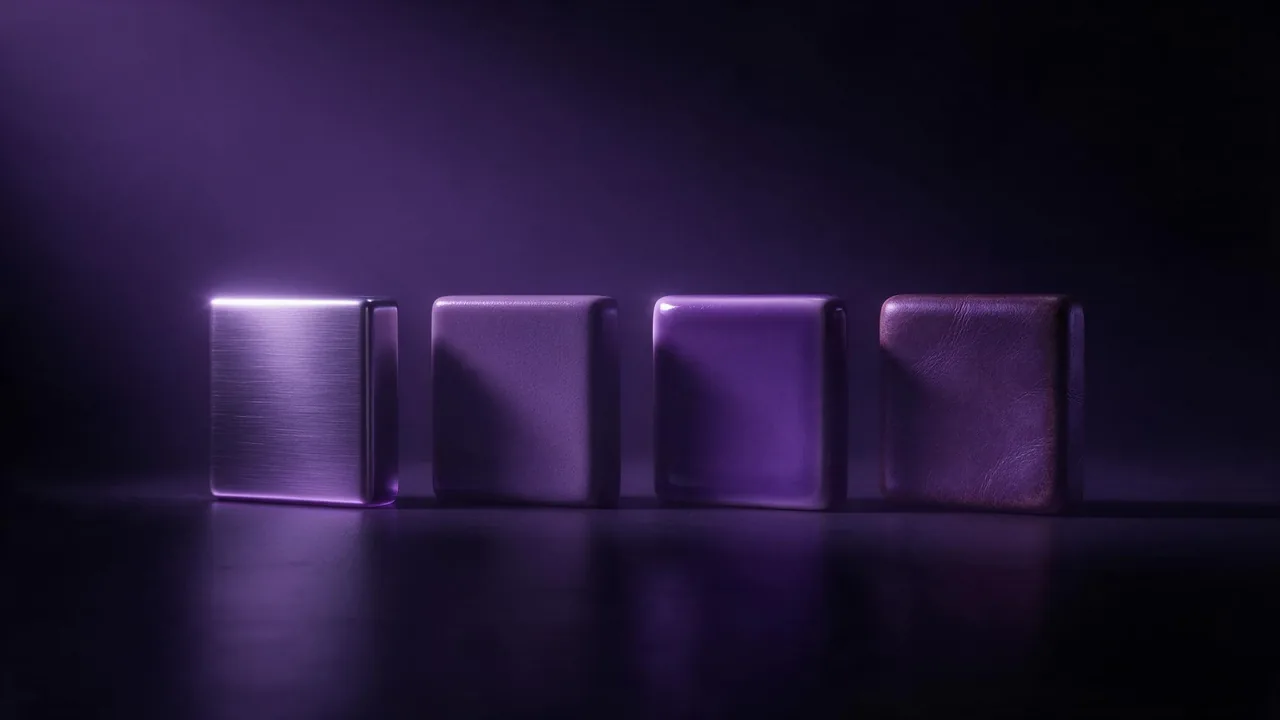
A material is mostly a promise about light. Matte scatters it, gloss returns it as a sharp highlight, brushed metal smears it into a streak along the grain, worn leather breaks it up into patches. When you name the finish, the model has to decide where the highlights go and how sharp they are, and that decision is what makes a surface read as real. It is the same reason the lighting guide asks for a direction and a quality of light: material and light are two halves of one description.
The glossary
Matte
Soft, even surface with no mirror highlights. Good for ceramics, paper packaging, powder-coated tools and anything you want to look calm and expensive. Pair it with soft light: matte under a hard spotlight can look flat and grey. On its own it sometimes drains colour, so name the colour too: matte terracotta, matte sage green.
Glossy and glazed
Glossy asks for crisp highlights and a little reflection of the surroundings; glazed adds the depth of a coating over a body, which is what makes pottery and lacquered wood look like more than plastic. The risk is a reflection of a room you did not ask for. Name what the surface should reflect, or keep it simple with a seamless backdrop.
Brushed, polished, anodised
Three metals that are not the same metal. Brushed steel shows fine parallel lines and a long, soft highlight; polished steel is a mirror and will reflect everything around it; anodised aluminium carries colour in the metal with a satin sheen. If a watch or a speaker grille looks like chrome-painted plastic, this is usually the missing word.
Worn, patinated, weathered
Wear is where products start to look owned. Worn leather with lighter edges and creases at the folds, brass with a patina in the recesses, weathered oak with raised grain. Say where the wear is, because wear everywhere reads as damage. These words also fight the over-clean look of many renders, the same problem the quality buzzwords post attacks from the other side.
Translucent and frosted
Glass, soap, skincare bottles, ice. Translucent asks the model to show light passing through; frosted diffuses it into a soft glow. These are the hardest finishes for a model to get right, and edges and liquid levels often need a re-roll. Backlight helps a lot: light from behind is what makes a translucent object glow.
Woven, knitted, grained
Fabric and wood read through their structure. Name the weave (linen, chunky knit, canvas) or the grain (oak, walnut, end grain) rather than writing textured, which tells the model nothing about the size or direction of the pattern.
One object, six finishes: a test worth a few renders
Before a real job, spend a small part of your balance learning how your chosen model handles finishes. Keep everything fixed and change only the material phrase. On models that have a seed field, pin it, as the seed explainer describes, so the composition holds still.
Product photo of a [matte black ceramic] coffee mug on a pale oak table, soft window light from the left, plain warm grey wall, three-quarter view, shallow depth of fieldLay the six results side by side. You will learn which words the model takes literally, which it ignores, and which pull the lighting or the background along with them. A cheap still model like Still Lite, from €0.30, is fine for this kind of test; move to Still, from €0.40, for the version you deliver.
Changing the finish of a picture you already have
If you like a render but the material is wrong, you do not have to start over. An image editing model from the catalog takes the picture and an instruction such as: change the mug to glazed cream stoneware, keep the table, the light and the framing. Name one change per round, as the edit prompt guide explains, and say what must stay.
Where words stop working
A finish word describes a kind of surface, not your surface. No prompt makes the model reproduce the exact sheen, grain or colour of a real product you sell, and close is not good enough when a buyer compares the photo with the parcel. For a real product, start from your own photo and use it as the input of an edit model, or use AI only for the setting around it; the product photography guide covers that route. Reflective finishes reflect an invented world, so a polished surface may show windows or shapes that make no sense up close. Fine woven patterns can shimmer or warp when the picture is resized. And in video, a texture that looks right in the first frame can crawl or melt as the camera moves, so keep motion slow on detailed surfaces.
Questions
Why do my AI product renders look like plastic?
Usually because the prompt names the object but not its material or finish, so the model averages them. Add a finish and a material right before the object, such as brushed steel or matte ceramic.
Can I change the material of an AI image I already made?
Yes. Give the picture to an image editing model with one instruction, for example change the mug to glazed stoneware, and list what must stay the same.
Will a prompt match the exact finish of my real product?
No. Words describe a kind of surface, not a specific one. For a real product, edit your own photo or use AI only for the background.