A New Year's Eve party portrait from your own photo with AI
Turn your own photo into a midnight party portrait: sequins, a champagne glass, fireworks, flash or soft bokeh, and crops for the feed and for Stories.
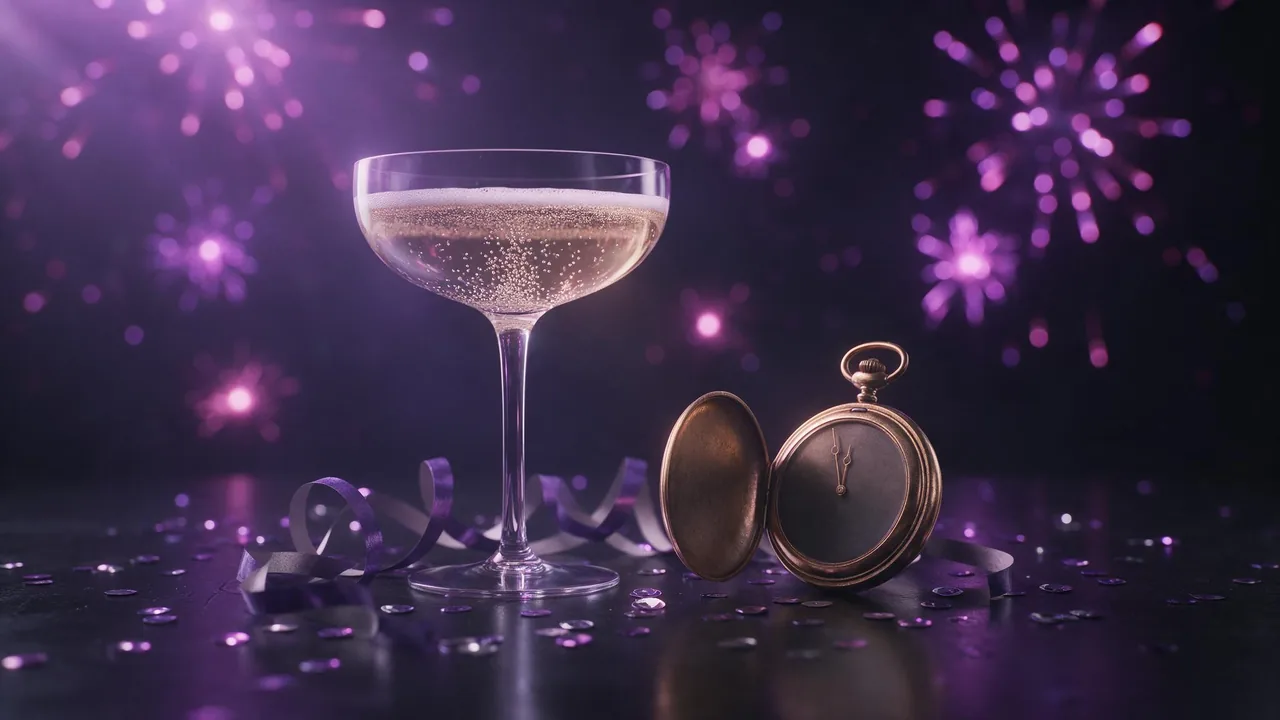
The December portraits most people make are warm and quiet: a tree, a window, a mug. A New Year's Eve picture is the opposite. It is late, it is loud, the light is hard or glittering, and something is about to happen at midnight. That changes what you ask an edit model for, and it changes what goes wrong. This post compares the two looks that work for a party portrait, then gives you the crops you need to post it the same night.
Two neighbours cover the calmer cases. The holiday portrait guide explains the source photo and the face lock step by step, and the Christmas market portrait handles an outdoor scene at dusk. Here it is night, indoors or on a rooftop, and the light comes from a camera flash or a sky full of fireworks.
Start with the lock, then dress the party
Party scenes tempt the model to restyle you as well as the room: glossier skin, a new hairstyle, a different smile. So the first sentence of every prompt names what must not change, before a single sequin is mentioned. After that, give the scene in a fixed order: the outfit, the thing in your hand, the backdrop, the light.
- Outfit: a sequin dress or jacket, a velvet blazer, a satin shirt. Pick one fabric; three shiny fabrics in one frame turn into noise.
- In hand: a champagne glass held by the stem, a sparkler, or nothing. Hands holding things are a weak spot, so one object is plenty.
- Backdrop: a room with streamers and balloons, a big clock showing a minute to midnight, or a city skyline with fireworks.
- Light: the choice that decides the whole picture, compared below.
Look one: the on-camera flash
This is the photo a friend takes at the party: a hard, direct flash, a bright face, a background that falls off into darkness, a slight shine on the skin. It feels candid and very of the moment. Because the flash lights the face from the front, it is also the friendliest look for keeping your features, since there are no deep shadows for the model to fill in.
Keep the person's face, skin tone, hair colour and hairstyle, eye colour and expression exactly as in the photo. Place them at a New Year's Eve house party at night: gold and silver streamers and a few balloons behind them, the room dark beyond. They wear a black sequin top and hold a champagne glass by the stem near their shoulder. Direct on-camera flash photo, bright even light on the face, crisp shadows behind the person, slight natural shine on the skin, candid party snapshot.Look two: soft bokeh and fireworks
The other way is the cinematic one: you stand on a balcony or by a tall window, the fireworks behind you are big soft discs of colour, and the face is lit gently from the front. It looks calmer and more expensive, but it asks more of the model. Coloured light behind a head likes to spill onto the skin, and a dark night scene invites the model to reshape the face in the shadows.
Keep the person's face, skin tone, hair and expression exactly as in the photo, with natural skin texture. They stand on a city rooftop at midnight in a dark velvet blazer, fireworks bursting in the sky far behind them, softly out of focus as round glowing lights. Soft warm light on the face from in front, a faint coloured rim of firework light only on the hair and shoulders. Shallow depth of field.The rim-light words come from the silhouette and backlight post; read it if your first result turns you into a dark outline against the sky.
Which look to choose
- Flash if your source photo is a close, front-lit selfie, if you want it to feel real, or if the first bokeh attempts drift from your face.
- Bokeh if the photo is a clear waist-up shot, if you want a card-like picture, or if the outfit is velvet or satin rather than sequins.
- Neither if your only photo is dark, side-lit or tiny in a group shot. Take a new one by a window in daylight; it will still become a night scene.
A 4:5 crop for the feed, a 9:16 crop for Stories
A party portrait usually goes out twice: a post in the feed and a Story at midnight. Do not crop one picture into both. Generate each ratio separately from the same source photo and the same prompt, so the model places you properly in each frame instead of you cutting off a glass or a hand later. The aspect ratio guide explains why the frame shape changes the composition.
For the Story, add a sentence that keeps room for a greeting: 'the person in the lower half of the frame, the upper third an empty dark sky with soft blurred lights'. The app puts its own buttons over the top and bottom edges, so keep your face in the middle band. Then write the greeting yourself in any editor: the model cannot be trusted with letters, and the space for text post shows how to leave a calm area that takes them well.
Three things that go wrong at a party
Sequins on the face
Glitter is contagious in a prompt: sparkles end up on the cheeks and in the eyes. Say 'clean natural skin, no glitter on the face' after the outfit sentence.
A party-ready stranger
Night scenes push toward a beauty filter: smoother, younger, more makeup. Add 'natural skin texture, visible pores' to the lock, and the plastic skin fix covers the rest.
Your face in the crowd
A packed room fills with faces, and some of them borrow yours. Ask for 'no other people' or 'a few blurred guests far behind'. Restart every attempt from the original photo, never from the last result.
What to expect
Attach your photo in the studio with + Image, pick an image-to-image model on the models page, and check the price on the Generate button before you run. Plan for a few tries per look. No model here promises an identical face, and there is no brush to protect it while the party is painted around you; the words are the only guard. Real fireworks and flash have quirks a model only imitates, so look at the result at full size before you post it. Use your own photo or one from someone who agreed: the terms forbid deepfakes and any sexual or intimate image of a real, identifiable person.
For a Story that moves, the portrait to clip guide shows how to let the fireworks burst and the glass catch the light for a few seconds.
Questions
Can AI make a New Year's Eve party photo from a normal selfie?
Yes, with an image-to-image edit model: upload a clear, front-lit photo, name the features to keep first, then describe the outfit, the glass, the backdrop and the light.
Flash or bokeh: which keeps my face better?
Usually the flash look. Front light leaves fewer shadows for the model to fill in, so the face drifts less than in a dark scene lit by fireworks.
How do I get the same portrait for a post and a Story?
Generate each ratio from the same photo and prompt rather than cropping one picture. For the Story, ask for empty sky in the upper third and add the greeting yourself.